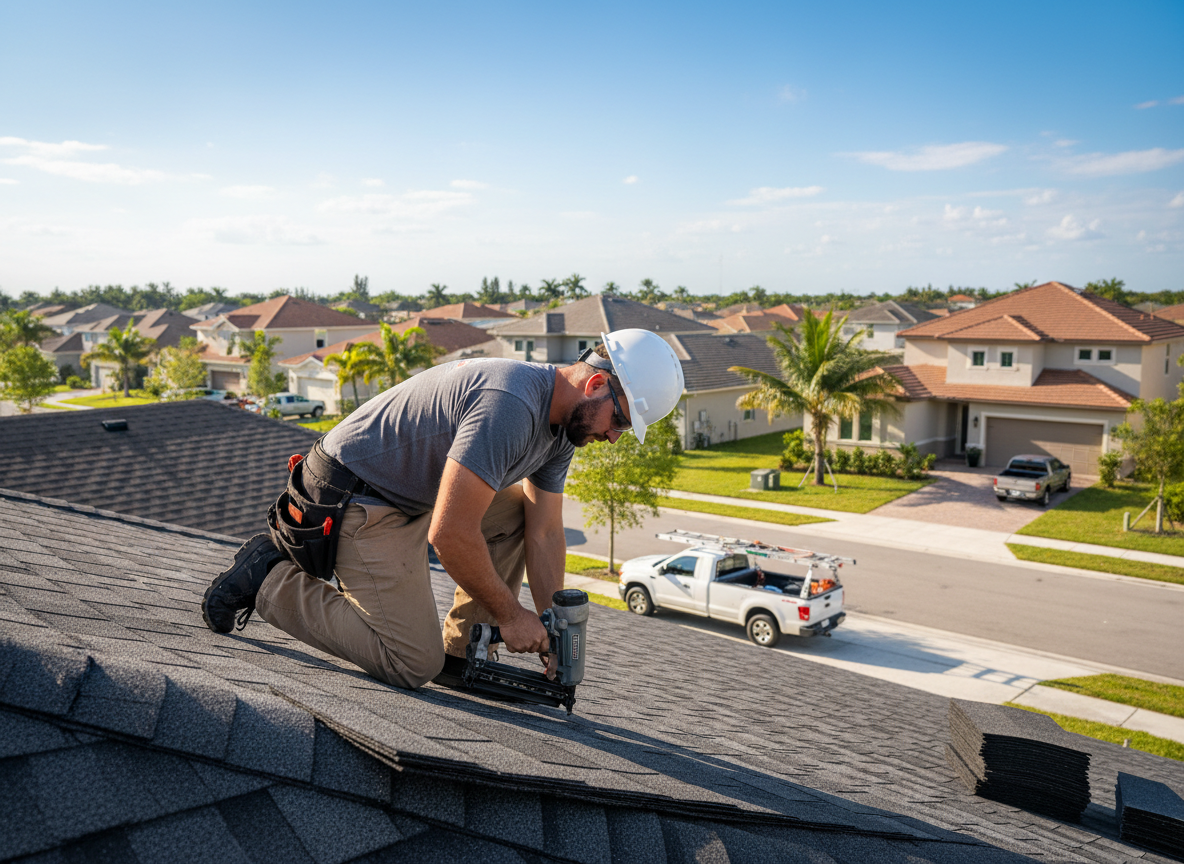
Cutler Bay homes built from the 1960s through the 1980s often carry original asphalt shingle or flat built-up roofs that now face repeated exposure to salt-laden winds and sudden downpours common along the coast. Miami-Dade County enforces strict wind-load requirements under the Florida Building Code, so any replacement must use impact-rated underlayment and fasteners rated for 130-plus mph gusts. Crews working in the area routinely check for hidden deck rot caused by previous leaks around plumbing vents and skylights before installing new materials.
Heavy seasonal rains concentrate water along valley flashings and around chimney bases in single-story ranch homes that dominate Cutler Bay streets. When these details fail, moisture travels under the decking and reaches interior ceilings before homeowners notice. Proper cricket installation behind chimneys and upgraded step flashing at wall intersections prevents the most common callbacks seen on older stock in the 33157 zip code.
Tropical storm season brings debris from nearby tree-lined streets onto low-slope sections, trapping moisture against seams. Regular inspection of modified bitumen or TPO membranes on commercial and residential flat roofs catches granule loss and blistering early. Addressing these issues before the next storm arrives keeps insurance claims straightforward and avoids larger structural repairs later.
Seasonal Storm Preparation
Before hurricane season, inspect tie-down straps on older gable ends and verify that ridge vent openings meet current wind-driven rain standards. Homeowners in Cutler Bay often overlook soffit vents that allow wind-driven water into attics during sideways rain events common in Miami-Dade.
Technician insight
In Cutler Bay, the thing that catches most people out with roofing contractor work is hidden plywood delamination on 1970s homes along the canals. Once you open the roof during a full replacement, the deck often needs more sections replaced than the original estimate showed because salt air and trapped moisture have worked under the old felt for years.
Gable End Leak After Heavy Rain
Homeowner noticed water stains along a bedroom ceiling after a spring storm. Inspection showed missing ridge cap nails and deteriorated step flashing where the addition met the original roof. Crew replaced the flashing, added proper drip edge, and sealed the ridge with hurricane-rated fasteners. No further leaks appeared during the next rainy season.
How it works
- 1
Initial Site Visit
Technician examines roof condition, notes existing materials, and checks for code compliance issues specific to Miami-Dade wind zones.
- 2
Material and Scope Review
Owner reviews findings with homeowner, explains required underlayment upgrades, and outlines work that meets current Florida Building Code.
- 3
Permit and Scheduling
Paperwork filed with Cutler Bay building department, then crew scheduled around weather windows to protect the structure during tear-off.
- 4
Installation and Final Walk
New roof installed with required flashing details, followed by walkthrough confirming all penetrations sealed and debris removed from property.
Pricing
Pricing varies by roof size, pitch, existing layers, and whether deck repairs are required after tear-off.