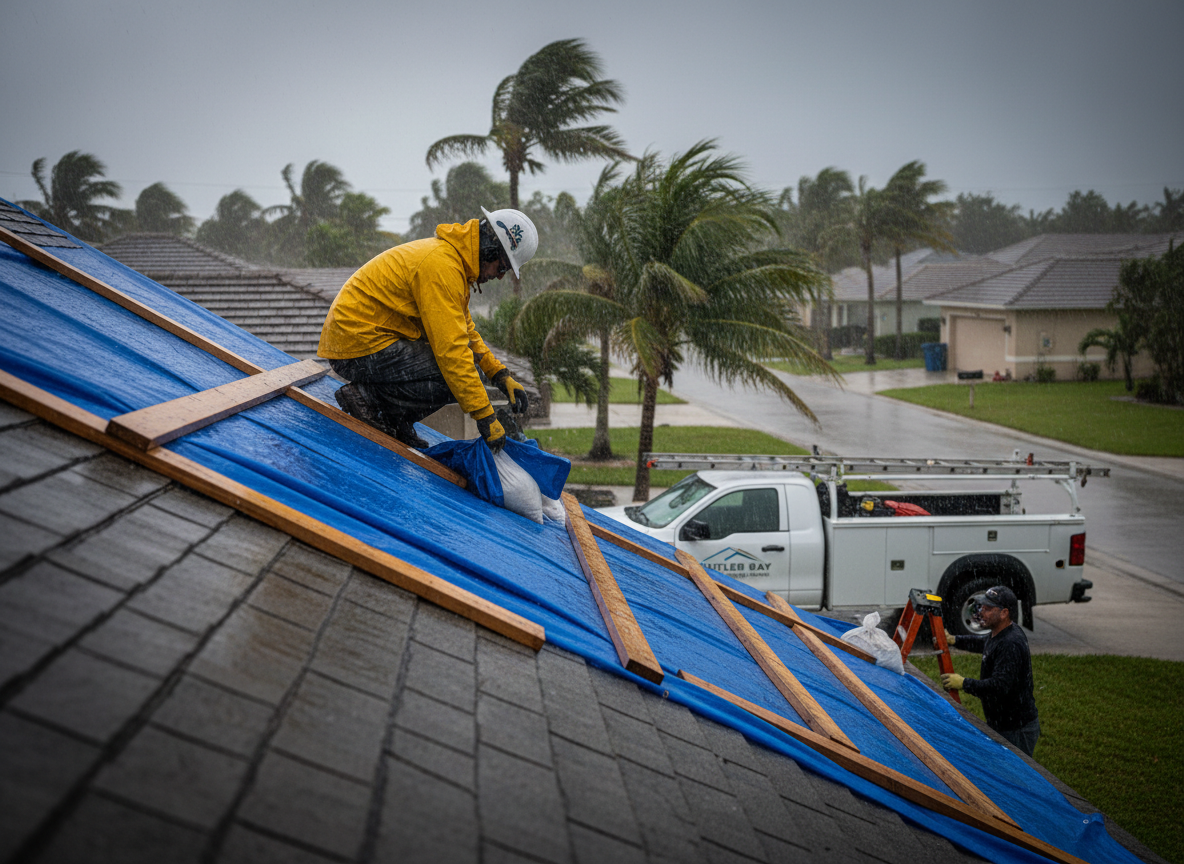
Cutler Bay roofs face repeated wind-driven rain and debris impacts during tropical storms that roll through Miami-Dade County. Emergency calls often involve compromised underlayment on 1970s-1990s concrete-tile homes where a single missing tile lets water reach the deck within hours. Crews arrive with reinforced tarps and furring strips sized for the steep pitches common on ranch-style houses along Old Cutler Road, securing edges against gusts that can exceed 40 mph even outside named storms.
High humidity in the Cutler Bay area means any breach quickly saturates insulation and sheathing. Technicians cut back wet sections only after confirming the extent with moisture meters, then install ice-and-water shield patches rated for the region’s 140 mph wind zones. This prevents mold growth that spreads fast once temperatures stay above 80 degrees, a detail that separates quick fixes from jobs that later require full deck replacement.
Night or weekend arrivals at the 19650 S Dixie Hwy shop allow immediate mobilization to neighborhoods like Cutler Ridge or Lakes by the Bay. Response focuses on containing active leaks first, then documenting damage for insurance adjusters who routinely inspect properties near the Florida Turnpike corridor after heavy afternoon downpours.
Seasonal Storm Readiness
Hurricane season brings debris from ficus and mahogany trees common in Cutler Bay yards. Pre-storm inspections target ridge vents and valley flashings that fail first under sustained winds, allowing crews to stage materials before roads close.
Technician insight
In Cutler Bay, the thing that catches most people out with Emergency roofing service is how fast afternoon thunderstorms soak through exposed decking on older tile roofs once a few tiles shift; homeowners often wait until the next day, but by then water has already reached the drywall in the vaulted ceilings common on homes south of SW 184th Street.
Post-storm tile breach
A heavy rain cell moved across Cutler Bay and dislodged several concrete tiles on a 1980s home near Franjo Road. Inspection found water tracking under the felt and into the attic insulation. Crews installed a reinforced tarp the same evening, then returned to replace the affected deck section and underlayment once the storm passed.
How it works
- 1
Initial Call Assessment
Dispatch gathers details on leak location, recent weather, and visible damage while the 24/7 line confirms address in Cutler Bay or nearby Miami-Dade streets.
- 2
On-Site Inspection
Technician climbs safely, checks attic for water trails, and evaluates tile, shingle, or flat membrane condition specific to local housing stock.
- 3
Temporary Containment
Install heavy-duty tarping or quick-set patches rated for regional wind loads to stop active intrusion before permanent work begins.
- 4
Permanent Repair or Replacement
Replace damaged decking, underlayment, and covering with materials matched to Miami-Dade wind codes, then clean up and document for insurance.
- 5
Final Walkthrough
Review all work with homeowner, note any follow-up items, and schedule if full replacement is needed after storm season.
Pricing
Upfront quotes provided after inspection; final cost depends on roof access, extent of wet materials, and whether temporary tarping or full section replacement is performed.