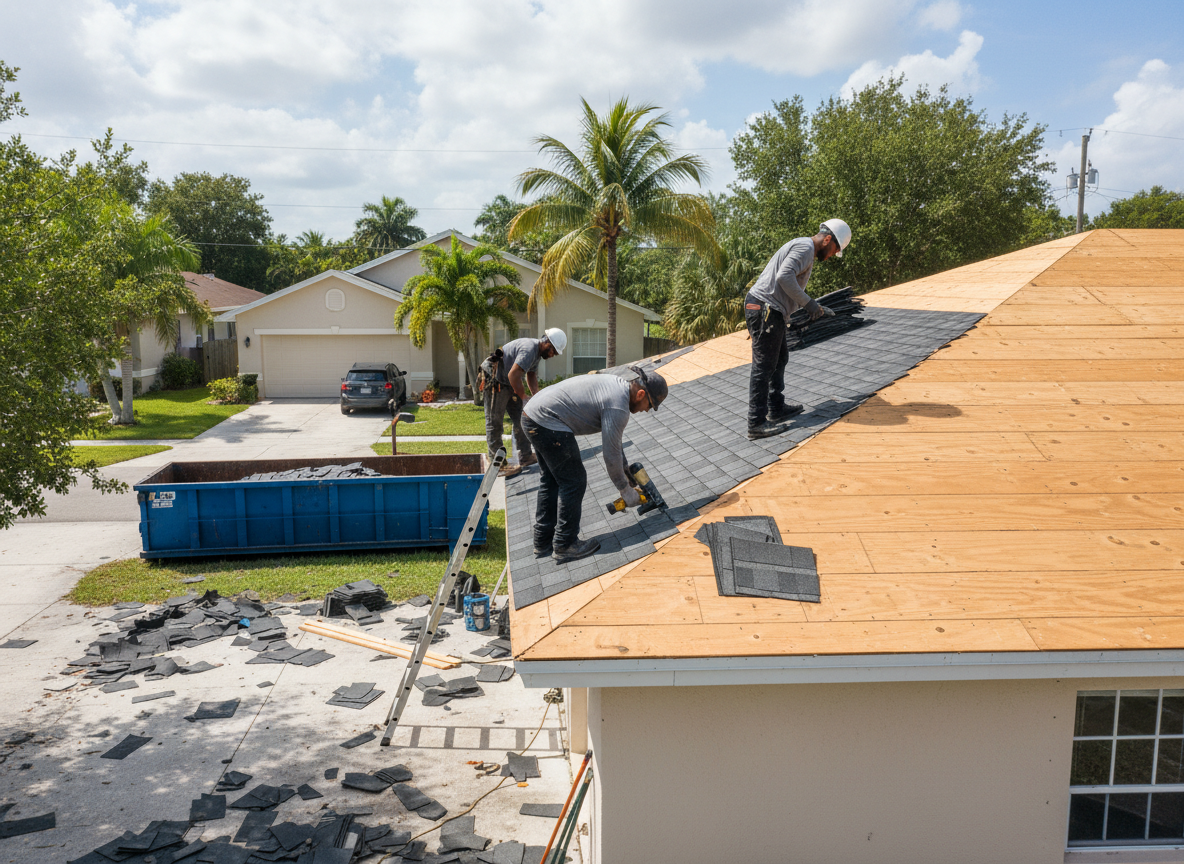
Roof installation in Cutler Bay requires selecting underlayment and fastening schedules that meet Miami-Dade County high-velocity hurricane zone standards. Many homes built between the late 1960s and early 1980s along streets near 19650 S Dixie Hwy still carry original plywood decks that must be inspected for delamination before new shingles or tiles go down. Skipping this step often leads to callbacks when summer rains drive moisture under the new surface.
Homeowners frequently request architectural shingles for their balance of cost and wind resistance, yet concrete tile remains common on ranch-style houses in the Cutler Ridge section. Tile demands heavier battens and additional ridge ventilation to manage the humidity that builds up under the roof deck during the wet season. Metal panels are gaining use on properties near the canal systems where salt air accelerates corrosion on standard fasteners.
Edge details around skylights, plumbing vents, and step flashing at chimneys are frequent failure points in Cutler Bay roofs. Proper counter-flashing integration prevents water from migrating behind stucco walls during afternoon thunderstorms. Crews also verify that new ridge vents do not conflict with existing attic insulation levels common in homes from that era.
Installation sequencing matters because afternoon storms can arrive with little warning. Materials are staged to allow full underlayment coverage by midday, and crews carry temporary tarps sized for the typical 1,800-square-foot Cutler Bay roof footprint.
Technician insight
In Cutler Bay, the thing that catches most people out with Roof Installation is the hidden deck rot behind original 1970s fascia boards on homes near the South Dixie corridor; once we open the edge, the job expands before the first shingle goes down.
Shingle Replacement on 1978 Cutler Bay Ranch
Owner reported recurring leaks near a skylight after heavy rain. Inspection showed deteriorated felt and soft plywood around the opening. Crew replaced the affected deck section, installed new synthetic underlayment and step flashing, then laid architectural shingles matched to the remaining roof. The skylight now drains correctly and no further interior staining has occurred.
How it works
- 1
On-Site Assessment
Measure the existing deck, note ventilation conditions, and check for prior repairs common in Cutler Bay stock.
- 2
Material Selection and Permit Pull
Choose impact-rated products that satisfy local wind-load requirements and submit paperwork for Miami-Dade approval.
- 3
Deck Preparation
Remove old roofing, replace damaged plywood, and install new synthetic underlayment with taped seams.
- 4
New Roof Installation
Apply shingles, tile, or metal panels with manufacturer-specified fasteners and flashing details.
- 5
Final Inspection and Cleanup
Walk the roof with the homeowner, verify ridge ventilation, and remove all debris from the property.
Pricing
Upfront written quotes issued after deck inspection; final cost depends on material type, deck repairs, and roof pitch.