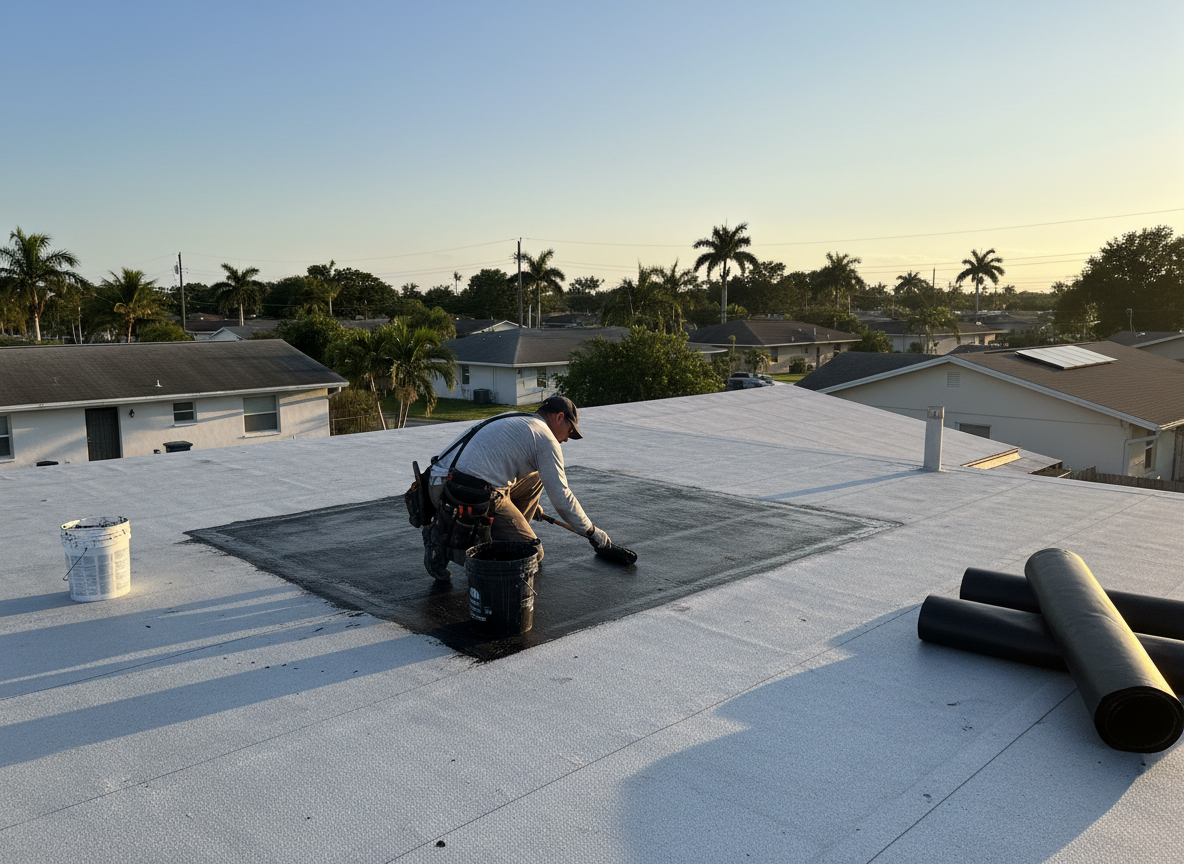
Flat roofs in Cutler Bay homes and commercial buildings often use modified bitumen or single-ply membranes that face constant stress from heavy seasonal rains and intense sun. Standing water collects quickly on low-slope sections near older additions or garage roofs, accelerating membrane breakdown and seam failure. Technicians check for clogged scuppers and improper pitch that trap moisture against the deck, especially on properties built in the 1970s and 1980s along South Dixie Highway corridors.
Miami-Dade County high-velocity hurricane zone requirements affect every repair. Replacement sections must meet current uplift ratings, and crews verify that existing flashings at parapets and HVAC curbs still tie into the new membrane without creating new entry points. Ignoring these details leads to repeat leaks during the next wet season when afternoon thunderstorms dump several inches in an hour.
Edge cases include repairs around skylights or solar panel mounts added after original construction. These penetrations often lack proper cricket slopes, allowing water to back up under the membrane. Crews also inspect for deck rot caused by years of undetected moisture, a common issue on Cutler Bay properties where tree cover and irrigation overspray keep surfaces damp longer than open lots.
Homeowners sometimes attempt coating over existing leaks without addressing the source. This traps water between layers and forces full tear-off later. Proper diagnosis starts with core samples and infrared scans to map wet insulation before any surface work begins.
Technician insight
In Cutler Bay, the thing that catches most people out with flat roof repair is ponding water on older low-slope sections where original scuppers sit too high after multiple re-roofs. Afternoon storms dump enough rain to push water under seams that look fine from the ground, especially on homes near the canal areas where humidity keeps everything damp.
Garage Addition Leak After Summer Storms
Water stains appeared on the ceiling of a Cutler Bay garage addition built in the 1980s. Inspection revealed ponding along the back edge where the scupper had been partially blocked by debris and the membrane had shrunk at the seam. Crew removed wet insulation, installed a new tapered section with improved slope to the scupper, and tied the patch into the existing modified bitumen field. No further leaks occurred during the next rainy season.
How it works
- 1
Initial Inspection
Technician examines the flat roof surface, drainage points, and perimeter flashings for signs of ponding, seam separation, or membrane blistering.
- 2
Moisture Assessment
Core samples and moisture mapping identify wet insulation and deck damage hidden beneath the surface.
- 3
Repair Plan
Crew selects compatible membrane patches or section replacements that meet Miami-Dade uplift standards and ties into existing drainage.
- 4
Execution and Cleanup
Work proceeds with proper termination bars and counter-flashing, followed by removal of all debris from the site.
- 5
Final Walkthrough
Owner reviews the repaired areas and drainage performance before the crew leaves.
Pricing
Cost depends on roof size, extent of wet insulation, and whether a full section replacement or targeted patch is needed; upfront quotes provided after inspection.