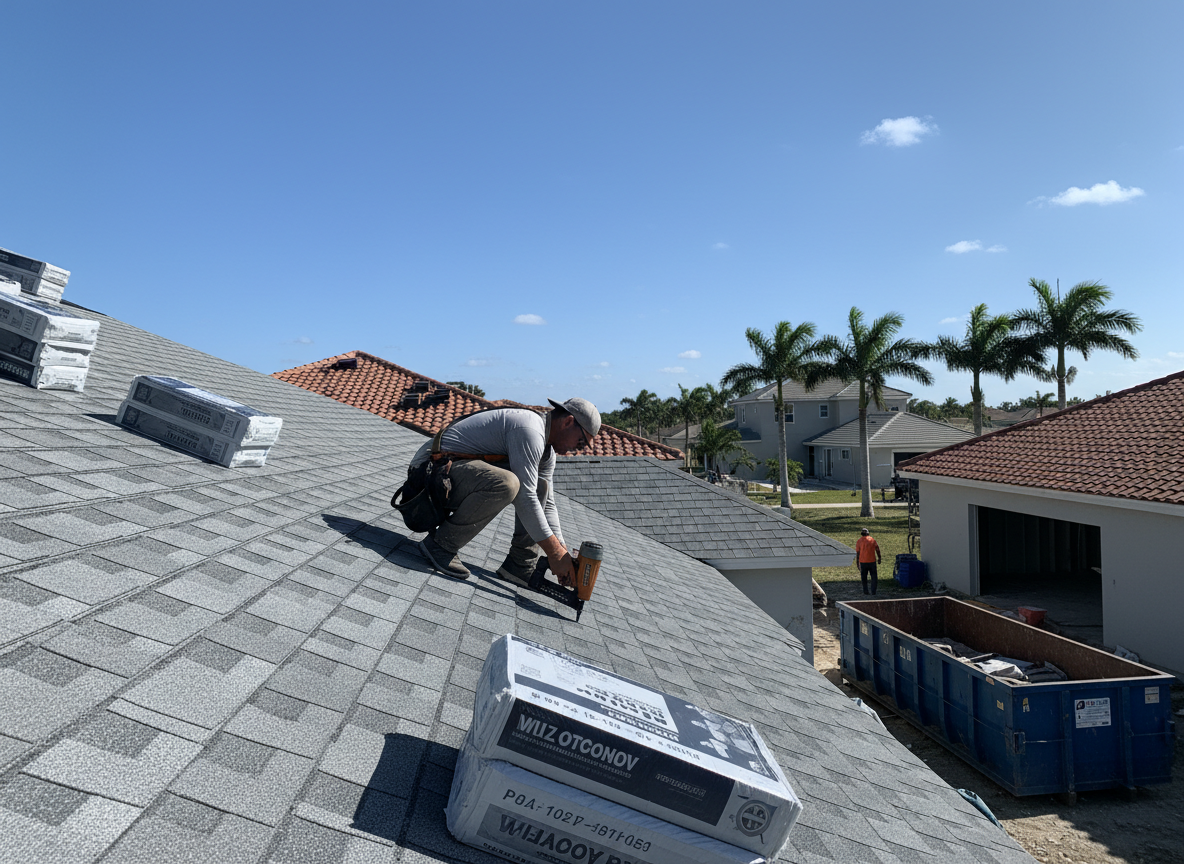
New construction roofing in Cutler Bay must meet Miami-Dade County high-velocity hurricane zone standards, which require specific fastening schedules and impact-rated materials on every roof deck. Builders often start with plywood or OSB sheathing that needs to be properly sealed at seams before underlayment goes down. In new subdivisions near the South Dixie Highway corridor, crews frequently deal with tight lot lines that limit staging space and require careful coordination with framers and electricians still on site.
Roof pitch and ventilation choices change based on the home's proximity to the coast, where salt air accelerates corrosion on standard fasteners. Metal panel systems or synthetic slate often get chosen over traditional shingles because they handle the daily humidity and sudden downpours better. Edge details around skylights, solar mounts, and ridge vents must be flashed before the final inspection, since missed steps here lead to callbacks once the rainy season arrives.
Local soil conditions in Cutler Bay can cause minor settling in the first two years after a slab is poured, so roofers leave extra play in valley flashings and step flashings against stucco walls. Proper drip edge placement and ice-and-water shield at all eaves and penetrations prevent water intrusion during the intense afternoon thunderstorms common from May through October.
Technician insight
In Cutler Bay, the thing that catches most people out with new construction roofing is how quickly the afternoon thunderstorms can soak an unfinished deck if the underlayment isn't on the same day the sheathing is nailed. The Miami-Dade fastening schedule also leaves zero room for shortcuts on new builds near the canal systems.
New Cutler Bay Home Roof Deck
The builder had sheathing complete but no underlayment when a sudden storm rolled in. We installed the high-wind underlayment and ice-and-water shield the next morning, added the required metal drip edge, then applied the impact-rated metal panels with the correct screw pattern. The roof passed inspection on the first try and has remained dry through two wet seasons.
How it works
- 1
Pre-Construction Review
Examine architectural plans and Miami-Dade product approval numbers to confirm the roofing assembly meets current wind-load requirements before any materials are ordered.
- 2
Deck Preparation
Verify sheathing nailing pattern, install underlayment, and apply ice-and-water shield at eaves, valleys, and penetrations according to the approved details.
- 3
Material Installation
Install chosen roofing system with required fasteners and flashing details, coordinating with other trades still finishing the exterior.
- 4
Final Inspection and Handover
Complete walkthrough with builder, document all penetrations and edge conditions, and provide maintenance guidance for the first hurricane season.
Pricing
Cost depends on square footage, chosen materials, and roof complexity; request an upfront quote for accurate pricing.