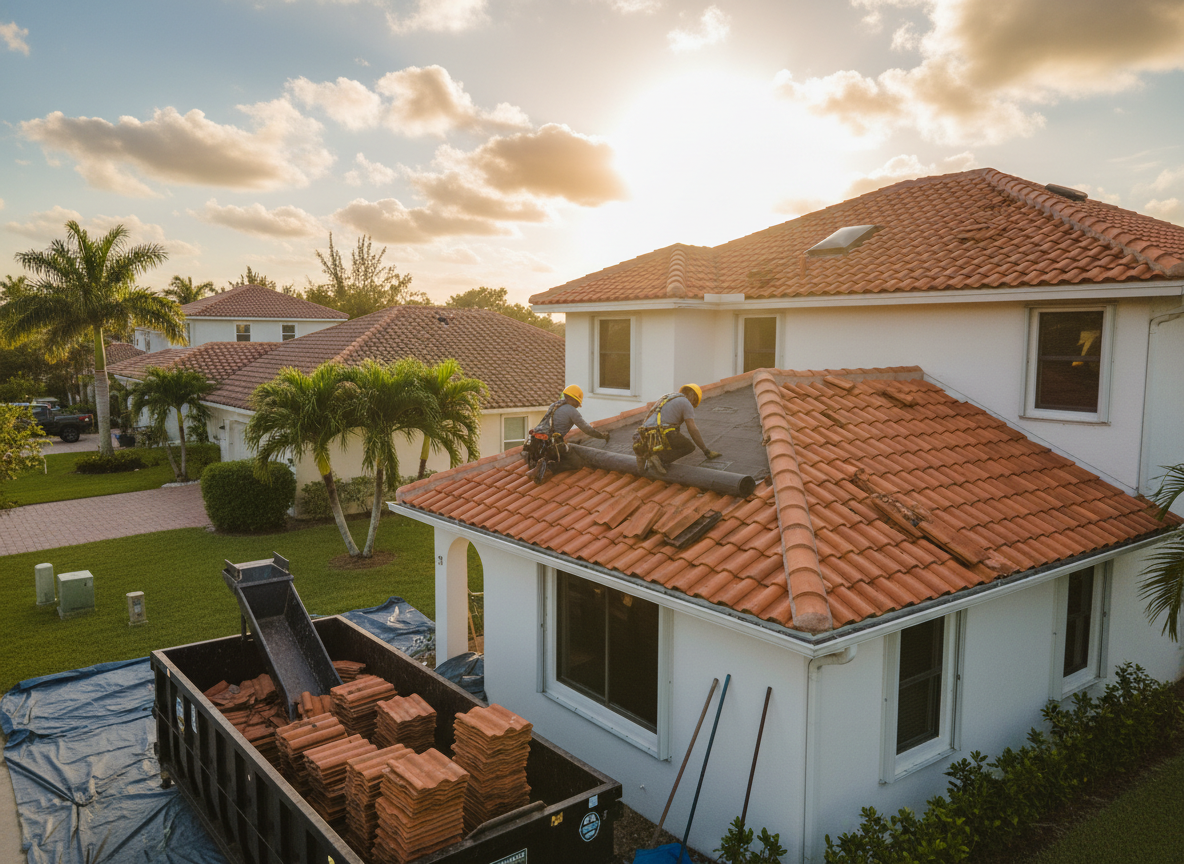
Cutler Bay homes built from the 1960s through the 1980s typically carry original concrete tile or asphalt shingle roofs that predate current Miami-Dade high-velocity hurricane zone requirements. These older decks often lack modern hurricane clips and proper underlayment, leaving them vulnerable once the protective coating erodes from repeated summer downpours and salt-laden air blowing in from Biscayne Bay. Replacing the roof means removing existing tiles without damaging the deck, installing new peel-and-stick membrane, and adding ring-shank nails at the spacing now required by code.
Heavy seasonal rains from May through October test every seam and penetration. Valleys, skylights, and vent boots are the first places water finds its way under aged flashing. In neighborhoods like Cutler Ridge and Whispering Pines, many roofs also sit under heavy tree cover, so crews must account for leaf debris that holds moisture against the surface and accelerates granule loss on shingles. Choosing between reinforced concrete tile and impact-rated asphalt depends on the home’s pitch, existing weight load, and whether the owner wants to match the original look common along Old Cutler Road.
Edge cases appear when homeowners request cool-roof coatings or solar-ready decks. The added weight of panels requires checking rafter spans on 1970s construction, and the coating must still meet the county’s wind-uplift ratings. Crews also watch for hidden wood rot around plumbing vents where constant condensation has softened the sheathing over decades. Every job starts with a full deck inspection before any new material goes down.
Technician insight
In Cutler Bay, the thing that catches most people out with Residential Roofing is the 1970s and 1980s housing stock along the older streets west of US 1; those decks were never built with the hurricane straps now required, so any re-roof turns into a partial deck replacement once the tiles come off.
Tile Roof Leak After Summer Storms
Homeowner in the Cutler Ridge neighborhood reported interior stains following repeated afternoon thunderstorms. Inspection showed cracked tiles and failed step flashing around a bathroom vent on a 1982 roof. Crew replaced the damaged section, installed new peel-and-stick membrane, and added proper hurricane clips along the repaired area. No further leaks appeared during the next rainy season.
How it works
- 1
On-Site Assessment
Technician climbs the roof to check deck condition, flashing integrity, and existing ventilation while noting any prior repairs common on Cutler Bay homes.
- 2
Material and Code Review
Review Miami-Dade product approvals for the chosen tile or shingle system and confirm required hurricane clips and underlayment meet current wind-load standards.
- 3
Deck Preparation
Remove old roofing, replace damaged plywood, install new drip edge, and apply self-adhered membrane at eaves and valleys before laying the final roof surface.
- 4
Final Inspection and Cleanup
Verify all fasteners and flashings, run a water test at critical points, and remove all debris from the yard and gutters before leaving the property.
Pricing
Upfront written quotes provided 24/7 with clear line items for materials and labor.