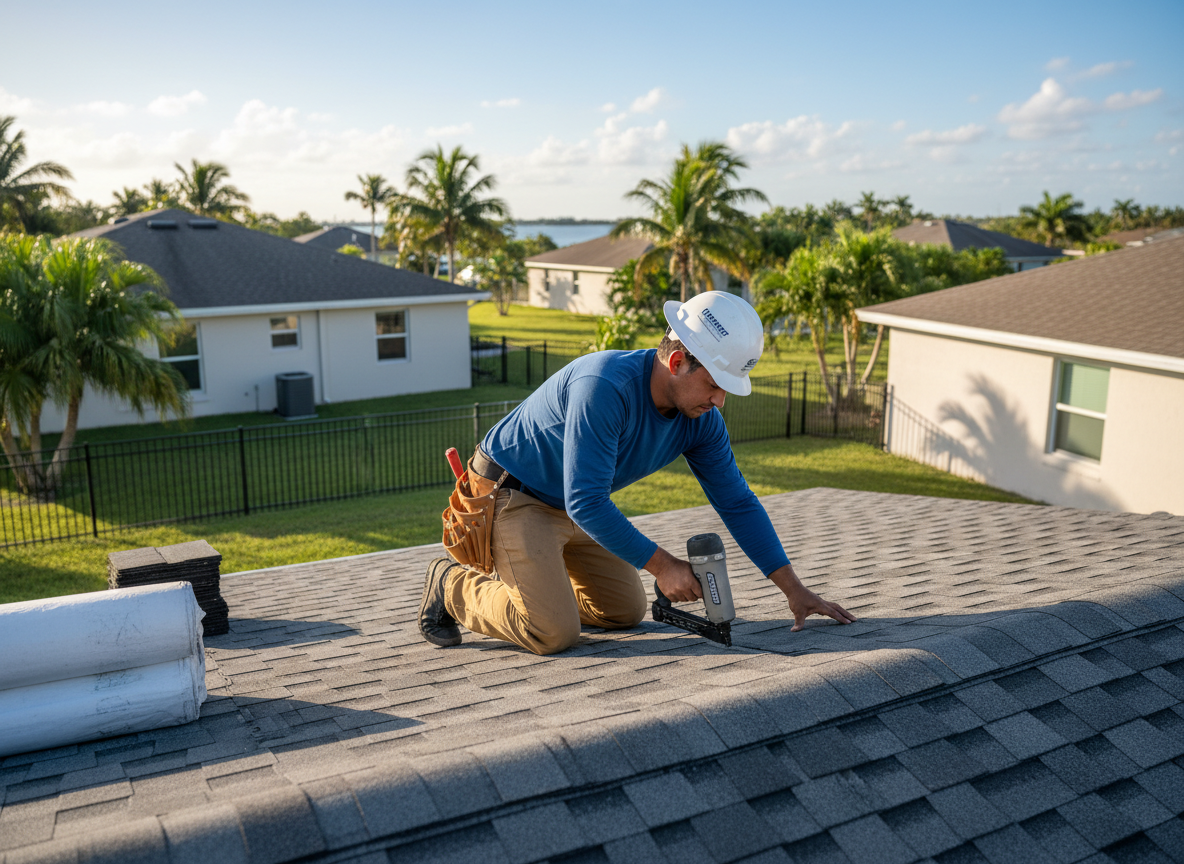
Roof covering in Cutler Bay must handle frequent heavy rain, high humidity and hurricane-force winds common in Miami-Dade County. Concrete tile remains the dominant choice on homes built from the 1980s onward in neighborhoods such as Cutler Ridge and Whispering Pines because it meets the county’s high-velocity hurricane zone requirements. Asphalt shingles and standing-seam metal are selected when weight limits or slope conditions rule out tile. Proper underlayment and sealed flashing at valleys and penetrations prevent moisture intrusion that accelerates deck rot in the area’s constant moisture.
Edge cases include re-covering over existing layers on older Cutler Bay properties where two-layer limits have already been reached, requiring full tear-off to avoid code violations. Miami-Dade product approval numbers must be verified for every membrane and fastener used. Homeowners often overlook ridge vent integration, which can trap heat and shorten shingle life during the long summer season. We inspect decking for termite damage and plywood delamination before any new covering is applied.
Installation follows a sequenced process that accounts for sudden afternoon thunderstorms. Crews stage materials to allow quick weatherproofing at the end of each day. Drip edges are extended farther on south-facing slopes where wind-driven rain is most aggressive. Final walkthrough includes checking every boot, pipe collar and step flashing for continuous seal against the salt-laden air that speeds corrosion on uncoated metal components.
Technician insight
In Cutler Bay the thing that catches most people out with roof covering is the combination of high humidity and salt air that corrodes metal drip edges and valley flashing on homes built before the 2002 code updates, especially in neighborhoods west of US 1 where afternoon storms hit hardest.
Tile Roof Covering Refresh After Storm Damage
Wind-driven rain had lifted several concrete tiles on a 1990s Cutler Bay home near Marlin Road. We found deteriorated felt underlayment and minor deck rot along the south valley. After full tear-off we installed new synthetic underlayment and re-laid matching tiles with upgraded hurricane clips. The roof passed the county re-inspection and has remained dry through two subsequent wet seasons.
How it works
- 1
Site Assessment
Measure roof planes, check deck condition and note existing covering type while reviewing Miami-Dade wind-load requirements for the specific Cutler Bay address.
- 2
Material Selection
Recommend tile, asphalt or metal systems that carry current county product approvals and match the home’s slope and exposure.
- 3
Tear-Off and Prep
Remove old layers down to decking, replace damaged plywood, and install new synthetic underlayment with sealed seams.
- 4
Covering Installation
Apply chosen roof covering with code-compliant fasteners, flashing and ridge details, completing daily tie-ins before weather changes.
- 5
Final Inspection
Walk the roof with the homeowner, verify all penetrations are sealed and document the finished covering for warranty records.
Pricing
Cost depends on chosen material, roof complexity and whether tear-off is needed; we provide upfront written quotes after inspection.