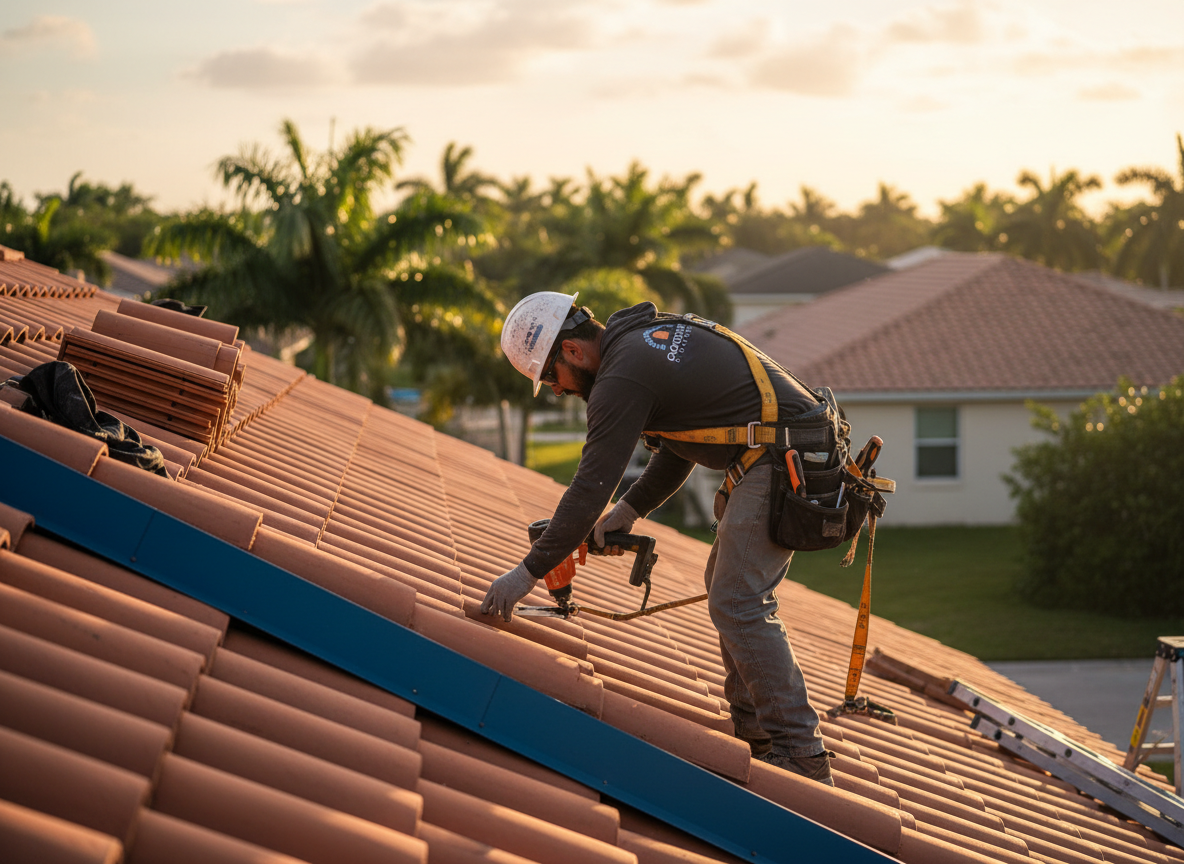
Cutler Bay sits in Miami-Dade County where older single-family homes from the 1970s and 1980s often carry original concrete tile or asphalt shingle roofs. Salt-laden air from nearby Biscayne Bay accelerates corrosion on metal flashings and fasteners, while intense summer downpours expose any seam or underlayment weakness. Roofing specialist calls here frequently involve inspecting for wind-driven rain entry at valleys and penetrations rather than obvious missing tiles.
Hurricane season brings additional code requirements under the Florida Building Code. Impact-rated underlayment and sealed edges become critical when retrofitting older roofs that predate current high-velocity hurricane zone standards. Homeowners sometimes overlook soffit and ridge ventilation issues that trap moisture beneath the decking, leading to premature deck rot that only shows up during a specialist inspection.
Terrain in Cutler Bay is generally flat with poor natural drainage in some subdivisions, so standing water after heavy rain can pool against roof edges and accelerate shingle granule loss. Roofing specialist work therefore includes checking perimeter flashing height and ensuring proper cricket construction around chimneys to redirect water flow away from living spaces.
When addressing leaks, the specialist must trace water paths through multiple layers because blown-in insulation and cathedral ceilings common in local ranch homes can hide damage until it reaches drywall. Upfront inspection at the 19650 S Dixie Hwy base allows the crew to arrive with the correct underlayment and fastening schedule for the specific roof age and pitch.
Technician insight
In Cutler Bay the thing that catches most people out with roofing specialist is how salt air and flat lots combine to rot the deck edges on 1980s tile roofs long before the field looks bad. Homeowners pressure-wash the tiles thinking they are cleaning them, but they actually drive water under the laps and shorten the life of the underlayment.
Post-Storm Leak in Cutler Ridge
Heavy rain from a tropical system entered along the valley of a 1980s home near Old Cutler Road. Inspection revealed lifted tiles and deteriorated felt caused by prior wind uplift. The crew replaced the valley underlayment with self-adhered membrane, reinstalled tiles with proper hurricane clips, and added ridge vent to improve airflow. No further interior staining occurred during the next wet season.
How it works
- 1
Initial Inspection
Technician examines the roof deck, underlayment, flashing, and ventilation from the address in Cutler Bay, documenting damage and code gaps.
- 2
Scope and Materials
Crew selects impact-rated products suited to Miami-Dade wind loads and schedules the work around afternoon storm patterns.
- 3
Execution
Old materials are removed where needed, deck repairs completed, new underlayment and covering installed with sealed penetrations.
- 4
Final Walk-Through
Homeowner reviews the completed sections, drainage paths, and ventilation before the crew leaves the site.
Pricing
Upfront quotes after on-site inspection; final price depends on roof size, existing damage extent, and material selection.