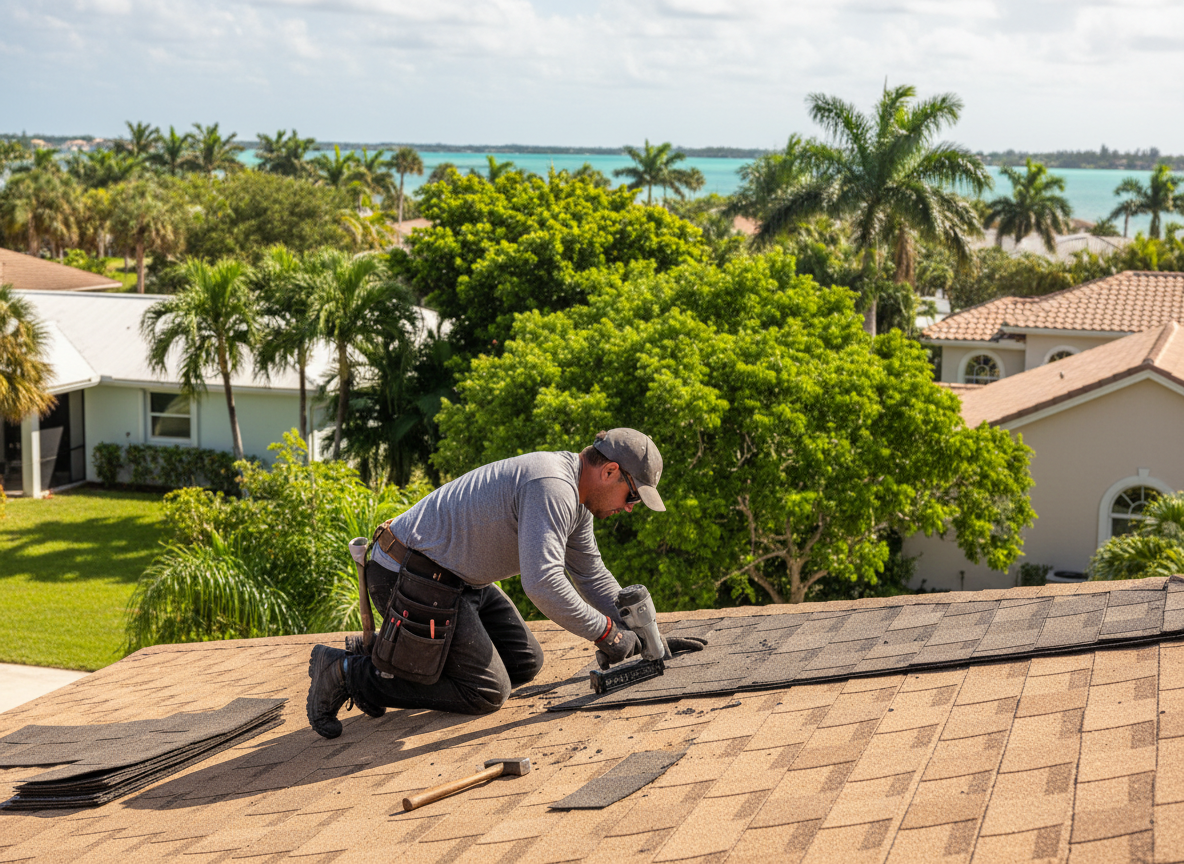
Cutler Bay sits in Miami-Dade County where frequent afternoon thunderstorms and hurricane season winds lift asphalt shingles on homes built from the 1960s through the 1980s. These roofs often sit over plywood decks that absorb moisture quickly once granules wear away, turning small wind-driven leaks into widespread rot along eaves and valleys. Repair crews must match existing three-tab or architectural shingles while checking for hidden deck damage that salt air accelerates in neighborhoods near the canals.
Proper repair starts with locating the exact entry points rather than blanket replacement. In this climate, underlayment can delaminate from heat and humidity cycles, so technicians remove only the affected courses, install new felt or synthetic underlayment, and seal flashing at chimneys and vents that commonly fail after repeated downpours. Homeowners along Old Cutler Road and Franjo Road see extra wear from tree debris that traps moisture against the shingles, requiring careful debris removal before any patching.
Code requirements in unincorporated Miami-Dade areas call for impact-rated shingles on replacements, but repairs must still meet the same wind-uplift standards to avoid insurance issues after the next storm. Crews carry matching bundles on the truck because local suppliers stock limited colors for older homes, and waiting days for delivery leaves decks exposed during the wet season.
Technician insight
In Cutler Bay, the thing that catches most people out with shingle roof repair is how quickly canal humidity and trapped tree debris turn a few lifted tabs into rotted decking along the south-facing eaves, especially on 1970s homes where the original felt has already delaminated.
Wind-Uplifted Shingles After Afternoon Storm
Homeowner in Cutler Bay noticed ceiling stains following a heavy thunderstorm. Inspection showed lifted shingles and wet underlayment near a valley on a 1978 roof. Damaged courses and underlayment were replaced, edges were reinforced, and flashing was resealed. No further leaks appeared after the next rain.
How it works
- 1
Site Inspection
Walk the roof and attic to map leaks, check deck condition, and note wind damage patterns typical after Cutler Bay storms.
- 2
Damage Documentation
Photograph affected shingles, flashing, and any rotted sections for homeowner records and insurance.
- 3
Targeted Removal
Lift and replace only damaged courses while preserving sound shingles and addressing underlayment issues.
- 4
Sealing and Finish
Install new shingles, reseal all penetrations, and verify drainage at valleys and eaves.
Pricing
Cost depends on square footage affected, deck repairs needed, and whether storm damage qualifies for insurance; upfront quotes provided after inspection.