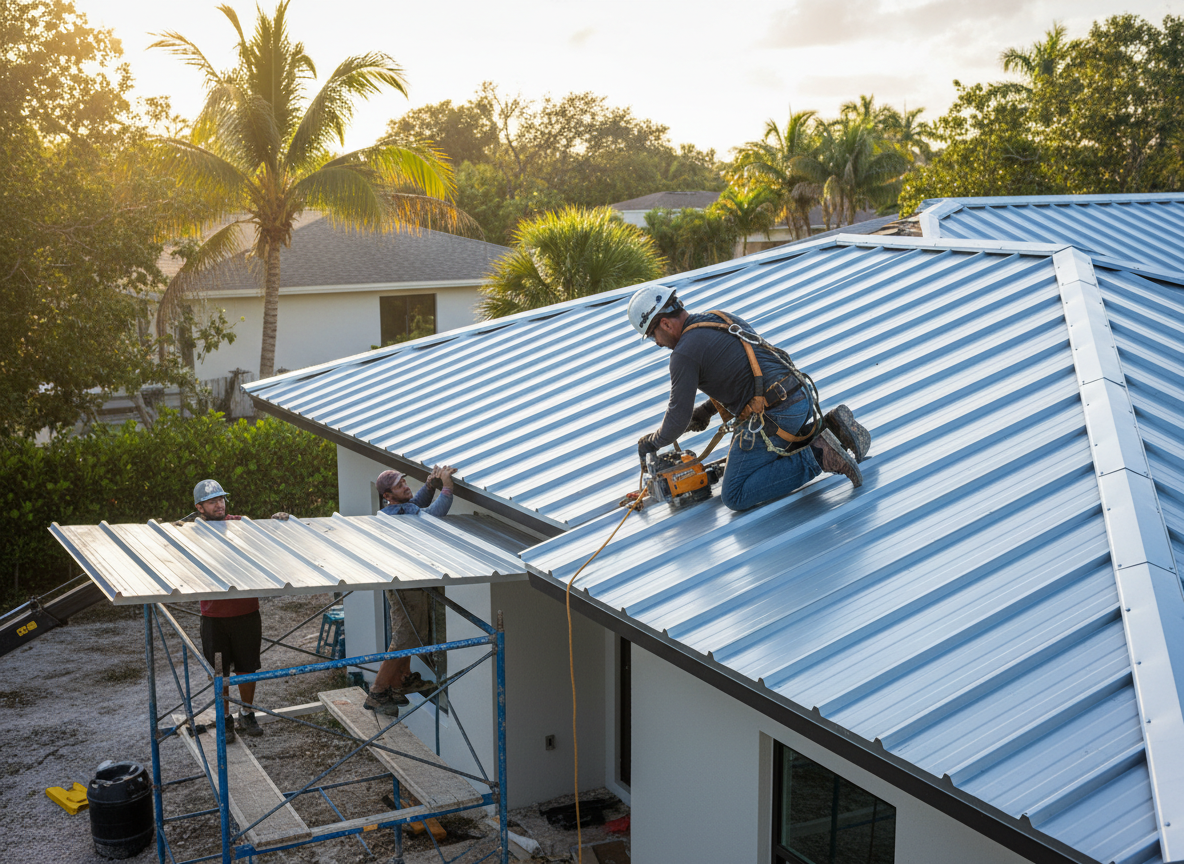
Steel roofing performs well in Cutler Bay because Miami-Dade County wind-load requirements demand panels that stay secure during tropical storms. Homeowners with 1960s and 1970s concrete-block houses often choose 26- or 29-gauge galvanized or Galvalume steel because the material sheds water quickly on low-slope roofs common in the area. Proper clip spacing and screw patterns matter more here than in inland counties because gusts off the bay can exceed 130 mph during named storms.
Salt air accelerates corrosion on untreated steel edges and fasteners, so experienced crews use painted or zinc-aluminum coated sheets and butyl tape at every seam. We also check for existing ridge vents that pull humid air through the attic, which shortens roof life if not addressed during replacement. Edge cases include carports and pool enclosures where steel must tie into existing aluminum framing without creating galvanic reactions.
Local building code now requires impact-rated underlayment on steel roofs in Cutler Bay after several seasons of wind-driven rain tests. Skipping the self-adhered membrane around penetrations leads to leaks that show up months later when humidity spikes. Crews also verify that new steel clears the minimum slope for the chosen panel profile so water does not pond during afternoon thunderstorms.
Technician insight
In Cutler Bay, the thing that catches most people out with steel roofing contractors is skipping the extra butyl tape and upgraded underlayment around skylights on 1970s homes; the salt air gets under the panels during the first big rain and the leaks show up inside the drywall months later.
Steel Roof Leak After Summer Storms
A Cutler Bay homeowner reported water stains near a skylight after repeated afternoon thunderstorms. Inspection showed the existing steel panels had pulled away from the underlayment at the skylight curb. We removed the damaged section, installed new impact-rated underlayment and fresh coated steel panels with sealed seams. The roof stayed dry through the rest of hurricane season.
How it works
- 1
Site Assessment
Measure the existing roof, note truss spacing on Cutler Bay concrete-block homes, and check for prior wind damage or salt corrosion.
- 2
Material Selection
Choose gauge, coating, and color that meet Miami-Dade wind and impact requirements while matching neighborhood aesthetics.
- 3
Deck Preparation
Remove old roofing, inspect sheathing, and install self-adhered underlayment at eaves, valleys, and penetrations.
- 4
Panel Installation
Fasten steel panels with code-approved clips and screws, seal all seams, and flash around vents and skylights.
- 5
Final Inspection
Walk the roof with the homeowner, verify drainage, and confirm all ridge and eave trim is secure before leaving the site.
Pricing
Pricing varies with roof size, steel gauge, underlayment upgrades, and access on Cutler Bay properties.